Best Bluetooth Speakers (2026): The Ones That Sound Big (Without the Buzzwords)
Bluetooth speakers are a minefield of fake watts, shouty tuning, and mystery waterproofing. Here’s how to buy a good one in 2026 — and the picks that usually nail it.
Bluetooth speakers should be simple: press play, enjoy music.
In practice, you’re choosing between:
- tiny boxes that claim “40W” and sound like a soda can
- party bricks that get loud but smear vocals
- “waterproof” models that panic the moment they hit a pool
This guide is deliberately practical. We’ll cover what matters (sound, volume, battery, durability, latency), what doesn’t (marketing watts), and which types of speakers tend to be the safest buys in 2026.
SolderMag Take: buy tuning + reliability, not “bass”
Most people don’t need a speaker that can “shake the room.” They need a speaker that:
- stays clean as you turn it up
- doesn’t sound harsh after 20 minutes
- survives real life (bags, beaches, kitchens)
A good Bluetooth speaker feels boring in the best way: consistent sound, predictable controls, and no drama.
The picks (2026)
These are category picks with examples, because availability and pricing change constantly.
Best overall (most people)
Medium portable speaker with EQ app + USB‑C + at least IP67
Why it wins:
- big enough to move air (real bass, not fake thump)
- still portable (one-hand carry)
- tends to have the best balance of volume vs clarity
Look for:
- USB‑C charging (skip Micro‑USB in 2026)
- IP67 (dust + dunkable) or IPX7 at minimum
- multi-band EQ in the companion app (or at least preset options)
Examples to sanity-check against (not a promise of “best”): JBL Charge-class, UE Boom-class, Soundcore Motion-class.
 Best overall
JBL Boombox 4
Best “small speaker that doesn’t annoy you”
Pocket speaker with a conservative tuning (no harsh treble spike)
Why:
- lives in a backpack and actually gets used
What to prioritize:
- clear vocals at low volume
- physical buttons you can use one-handed
- strap/loop that won’t tear off
If it has a “Super Bass” button, assume it’s compensating.
 Best budget
Ultimate Ears WONDERBOOM 4
Best for outdoors / beach / worksite
Rugged cylinder/brick speaker with real dust sealing + rinse-friendly design
Why:
- sand and ports are enemies
Checklist:
- IP67 preferred (dust matters more than people think)
- covered ports with a solid flap or well-sealed exposed USB‑C
- grippy exterior that won’t launch off a picnic table
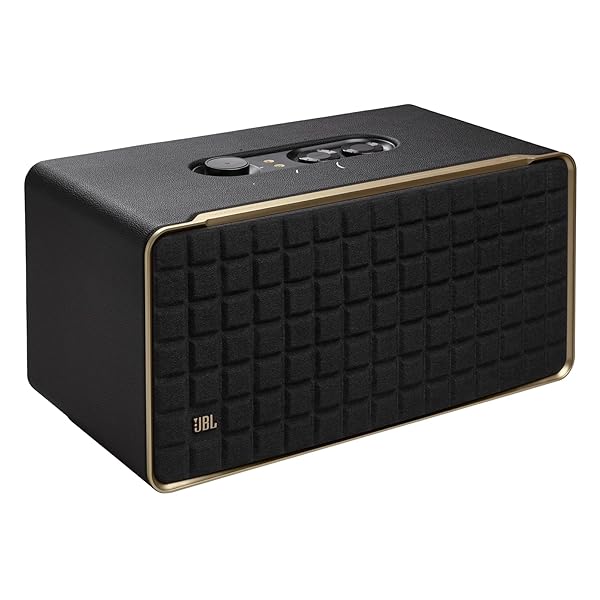 Best for home
JBL Authentics 500
Best for “I want room sound, not just loud”
Home-oriented wireless speaker with Wi‑Fi option (AirPlay/Chromecast) + Bluetooth fallback
Why:
- Wi‑Fi streaming is more stable, higher quality, and less latency-prone than pure Bluetooth
- better stereo imaging and midrange detail
If you mostly listen at home: this is usually the best-sounding money.
 Best value
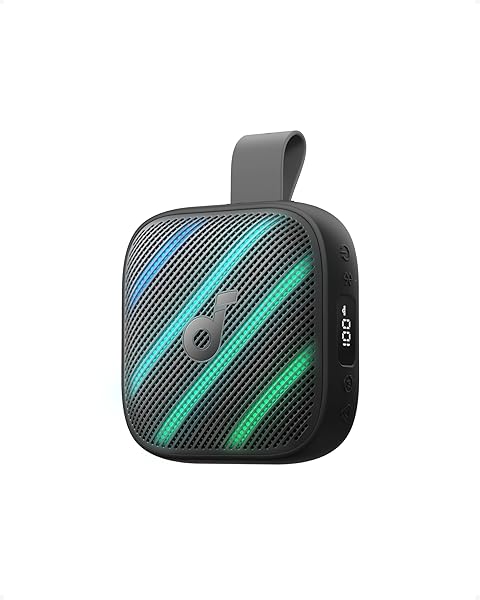
Anker Soundcore Select 4 Go
Best party pick (volume-per-dollar)
Large party speaker with a proven limiter (doesn’t distort when pushed)
What matters:
- clean at high volume
- a limiter that protects the drivers without “pumping” the music
What doesn’t:
- LED light shows (nice, but not the point)
How to choose in 90 seconds
Answer these in order:
-
Where will you use it most?
- desk/home → consider Wi‑Fi-capable speakers
- outdoors → prioritize ruggedness + IP rating
- travel → medium portable is the sweet spot
-
How loud do you really need?
- background music → small is fine
- picnic / small group → medium
- party / big room / outdoors with wind → large
-
Do you care about video latency?
- YouTube/TikTok: most are fine
- gaming / instruments / DJ apps: you want low latency support (and even then, wired is better)
-
Do you want stereo?
- If yes, look for true stereo pairing or buy a single speaker that’s genuinely wide.
Specs that matter (and the ones that don’t)
Ignore “watts” unless the brand publishes real measurements
Bluetooth speaker wattage is marketing chaos. Unless the manufacturer clearly states what the number means (RMS, THD, frequency), it’s not decision-grade info.
What does correlate with performance:
- size of the drivers and enclosure volume
- battery capacity (but also efficiency)
- reviews with measurements (frequency response, max SPL, distortion)
Battery: prefer honesty over hero numbers
A claim like “24 hours” often means low volume, bass off, ideal conditions.
Rule of thumb:
- If you want all-day battery, buy the next size up.
USB‑C charging is the new baseline
If it still charges via Micro‑USB, it’s either old stock or cheap internals.
IP ratings: IPX7 ≠ IP67
- IPX7: water immersion tested, dust not rated
- IP67: dust-tight + water immersion
If you’re buying for the beach/camping, dust matters.
Codecs: nice-to-have, rarely a dealbreaker
SBC is the default; AAC helps on iPhone; “hi-res” codecs can be useful, but only if:
- your phone supports it, and
- the speaker is tuned well (codec can’t fix bad tuning)
Red flags (skip these)
- No USB‑C (Micro‑USB in 2026 is a hard no)
- No warranty/support footprint (mystery brands vanish when your battery swells)
- “IPX5” marketed as waterproof (it’s splash resistant; that’s it)
- No EQ/app and a “V-shaped” sound (lots of bass + treble, missing vocals)
- Controls that require the app for basics (volume, pairing, battery status)
- Charging while playing causes loud hiss (common in cheap power design)
Quick buying checklist (printable)
Before you buy, confirm:
- [ ] USB‑C charging
- [ ] IP67 (or at least IPX7)
- [ ] Physical buttons for play/pause/volume
- [ ] Battery rating that matches your use (assume half of the claim at real volume)
- [ ] An EQ option (app or onboard presets)
- [ ] Trusted reviews with measurements (not just impressions)
Sources
- Bluetooth SIG overview and core specs (codec/connection basics): https://www.bluetooth.com/
- IP rating standard background (IEC 60529 summaries): https://en.wikipedia.org/wiki/IP_code (overview) + manufacturer test notes
- Measurement-focused reviewers (frequency response / max SPL / distortion):
- RTINGS speaker testing methodology: https://www.rtings.com/speaker/tests
- SoundGuys speaker testing & explanations: https://www.soundguys.com/
- Wirecutter (useful for long-term durability notes): https://www.nytimes.com/wirecutter/
If you tell me your use case (desk/outdoors/party), phone (iPhone/Android), and “must survive” conditions (sand? shower? toddler?), I can narrow this down to one safe buy in under a minute.