Best Wi‑Fi 7 Routers (2026): Top Picks for Homes and Gaming
Wi‑Fi 7 is worth it when it reduces latency spikes and congestion. Here’s how to buy the right router for your space without paying for marketing.
Written by the SolderMag Editorial Team. We update recommendations against current product availability, disclose affiliate links, explain ranking criteria in our testing methodology, and correct material errors through the contact page.
As an Amazon Associate I earn from qualifying purchases. Product prices and availability can change.

Wi‑Fi 7 routers are getting cheaper and louder at the same time. louder in marketing, not necessarily in fan noise.
If you’re buying Wi‑Fi 7 in 2026, the goal isn’t “highest speed test screenshot.” It’s:
- fewer dead spots
- fewer lag spikes
- better performance when multiple devices are active
This guide is how to pick a Wi-Fi 7 router that actually improves your daily experience. (If you want the tech background first, read Wi-Fi 7 explained without the marketing.)
SolderMag Take: most wifi 7 router problems are geometry, not standards
People upgrade routers when the real issue is:
- terrible placement
- interference
- bufferbloat
- a weak backhaul
A good Wi‑Fi 6 router placed correctly can beat a Wi‑Fi 7 router shoved behind a TV.
So the buying order is:
- placement and layout
- backhaul where possible (Ethernet)
- then hardware
That is also how we rank these picks. We care less about one perfect speed test and more about whether the router keeps calls stable, handles multiple devices, and gives you enough Ethernet headroom for the next few years.
Who actually needs a wifi 7 router in 2026?
Buy Wi‑Fi 7 if:
- you live in a congested area (apartments)
- you have many devices (smart home + laptops + consoles)
- you care about latency stability (calls, gaming)
- you’re upgrading anyway and want 3-5 years of runway
Skip Wi‑Fi 7 if:
- your current Wi‑Fi is stable
- you don’t have 6 GHz clients and don’t plan to soon
- your biggest issue is ISP speed (not Wi‑Fi)
How to choose the right wifi 7 router: apartment vs house vs gaming
Apartments: you need congestion handling
Priorities:
- strong 5 GHz + 6 GHz radios
- good firmware
- stable roaming if you add nodes later
Avoid:
- “gaming router” nonsense unless it has real QoS/SQM features
Houses: you need coverage
A single router rarely covers a multi-story house well. For most houses, a Wi-Fi 7 mesh system is the better investment.
Priorities:
- mesh compatibility (or plan to add APs)
- wired backhaul options
Gaming: you need latency consistency
“Gaming” claims are marketing unless the router supports:
- SQM / smart queue management
- sane QoS settings
If you are buying for a console or gaming PC, wire that device before spending more on antennas. A $10 Ethernet cable beats a $500 router when the gaming device is within reach.
Which router should you buy?
eero Max 7: best for simple high-end homes
The eero Max 7 is the safest pick for buyers who want fast Wi‑Fi without becoming a network administrator. It is expensive, and some advanced features sit behind subscription software, but setup and day-to-day reliability are the draw.
TP-Link Archer BE550: best value single router
The Archer BE550 is the practical pick when you want Wi‑Fi 7, multiple 2.5GbE ports, and a lower price. It is not the range king, but it is a sensible upgrade for apartments and medium homes.
TP-Link Deco BE63: best if you are really solving coverage
If your problem is upstairs/downstairs coverage, do not force a single router to do a mesh job. The Deco BE63 is the better buy for whole-home coverage, and our full Wi‑Fi 7 mesh guide explains how to place it.
TP-Link Archer BE3600: best budget entry
The BE3600 is for buyers who want current-generation hardware at the lowest realistic price. It is not the router we would buy for a busy smart home, but it is reasonable for smaller spaces.
Wifi 7 router features that actually matter
1) QoS/SQM (bufferbloat control)
If your household uploads while you game/call, SQM is the feature that prevents spikes.
2) 6 GHz support (where legal)
6 GHz can be cleaner, but range is shorter. Great for apartments, less magical through walls.
3) Firmware support
Buy from brands that ship updates.
4) Ethernet ports
If you pay for multi-gig internet or plan to use wired backhaul later, look for 2.5GbE ports. Gigabit-only LAN ports can bottleneck an otherwise modern router.
5) App controls without hostage pricing
Router apps are useful for setup, guest networks, device pausing, and firmware updates. Just check which features require a subscription before you buy.
When mesh is the better purchase
Buy a single router when the problem is congestion near the router, old hardware, or a small apartment. Buy mesh when the problem is physical coverage.
Signs you should jump to mesh:
- the router must live at one end of the house
- bedrooms or offices sit behind several walls
- you need stable Wi‑Fi on multiple floors
- outdoor cameras or a garage keep dropping
- you already have Ethernet runs for wired backhaul
If those bullets describe your home, start with the best Wi-Fi 7 mesh systems instead of buying a flagship single router and hoping physics changes.
Wifi 7 router setup tips for free performance
- Place the router centrally and high
- Don’t hide it in a cabinet
- Separate IoT to its own SSID if possible
- Run a bufferbloat test; enable SQM if available
- Update firmware before testing range
- Give 6 GHz devices line-of-sight where possible
- Use Ethernet for TVs, desktops, consoles, and NAS boxes when you can
Our top wifi 7 router picks for 2026
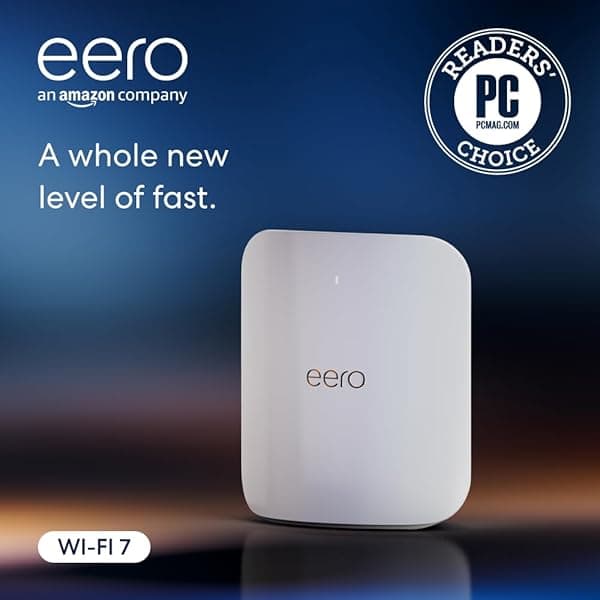 Best overall
eero Max 7
 Best value
TP-Link Archer BE550
 Best for large homes
TP-Link Deco BE63
 Best budget
TP-Link Archer BE3600
For a detailed look at our top pick, read the full eero Max 7 review. If your cable plan is the bottleneck, start with our best cable modems before replacing the router. And if you're not sure whether the upgrade is worth it yet, our analysis of why you might not need Wi-Fi 7 covers the honest trade-offs.
If your main complaint is lag while gaming, read our best gaming routers guide before buying a router purely for higher Wi-Fi numbers. If you want the value path before paying for Wi-Fi 7, our best Wi-Fi 6 routers guide covers the cheaper standard that still makes sense for many homes.
Sources and methodology
- Independent router test sites that measure latency under load
- Vendor documentation for MLO/QoS