Best USB‑C Power Banks (2026): Real PD, Real Capacity, No Weird Dropouts
USB‑C power banks are either lifesavers or expensive liars. Here’s how to pick one that actually does USB‑PD properly (and doesn’t faceplant at 30%).
Written by the SolderMag Editorial Team. We update recommendations against current product availability, disclose affiliate links, explain ranking criteria in our testing methodology, and correct material errors through the contact page.
As an Amazon Associate I earn from qualifying purchases. Product prices and availability can change.
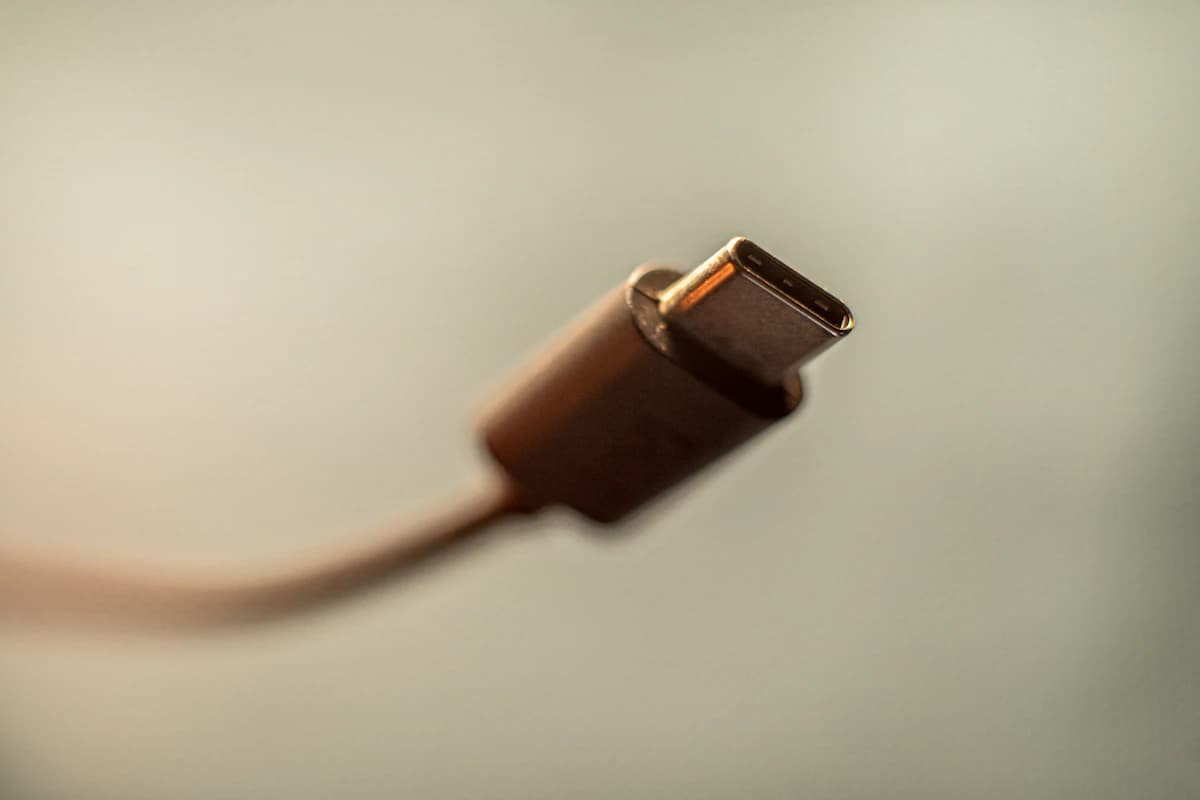
A USB‑C power bank should be simple: plug in, charge, move on.
In 2026, the market is still full of:
- “PD” labels that mean something, but not the thing you need
- capacity numbers that look huge until you do the watt‑hour math
- power banks that negotiate 20V once… then drop to 9V the moment they warm up
This guide is for buying a power bank that behaves like a reliable power supply, not a lottery ticket.
SolderMag Take: the best power banks are rated by Wh, not mAh
mAh is marketing. Watt‑hours (Wh) is the only capacity number that survives the real world.
- Airlines care about Wh.
- Laptops care about voltage + watts (USB‑PD profiles).
- Your actual runtime is basically: (power bank Wh × efficiency) ÷ your device’s watts.
If a listing won’t state Wh clearly, or hides the PD profiles, it’s not “mysterious”. it’s avoiding accountability.
The two power bank specs that actually matter
1) Capacity: Wh (not mAh)
Rule of thumb:
- ~10,000 mAh banks are usually ~37 Wh (good for phones, light travel)
- ~20,000 mAh banks are usually ~74 Wh (the sweet spot)
- ~27,000 mAh banks are typically ~99.9 Wh (max-ish for carry-on rules in many regions)
2) Output: USB‑PD watts and profiles
For phones, 20-30W is fine.
For tablets, 30-45W is comfortable.
For laptops, look for:
- 45W minimum for “can top up a laptop”
- 65W for “actually useful for most USB‑C laptops”
- 100W only if you know your laptop can pull it (and you have a 100W-rated cable)
Also: a lot of power banks advertise “100W” but only deliver it from one specific port.
Our top power bank picks for 2026
I’m not listing exact models here yet because affiliate links aren’t live and the SKU churn is brutal. Instead, these are the types of power banks that consistently test well and stay sane over time.
Best overall (most people): 20,000 mAh (~74 Wh) with 45-65W USB‑PD
Why it wins:
- enough capacity for 2-4 phone charges or a meaningful laptop top‑up
- not too heavy, not too expensive
- fits the “carry every day” reality
What to look for:
- USB‑C in/out on at least one port
- 45-65W PD clearly stated
- pass‑through charging only if it’s explicitly supported (many do it badly)
 Best overall
Anker Prime Power Bank (26K, 300W) A110A
Best for laptop-first: 99 Wh-class bank with 65-100W USB‑PD
Why:
- the only category that feels like “portable wall power”
What to look for:
- explicit 20V PD support (not just “PD”)
- a real power allocation table if it has multiple ports
- a casing that doesn’t feel like a toy (thermal design matters)
Travel note:
- Many airlines have special rules around ~100 Wh batteries. This category is usually carry‑on friendly, but always check your carrier.
 Best for laptops
UGREEN Nexode 145W 25,000mAh Power Bank
Best slim everyday carry: ~10,000 mAh with 20-30W USB‑PD
Why:
- the one you actually bring
What to look for:
- USB‑C input that’s not painfully slow (avoid 10W input in 2026)
- a single USB‑C port that can do full speed without “sharing penalties”
 Best value
INIU 45W Portable Charger 20,000mAh
Best for two-device life: dual USB‑C with honest sharing
Why:
- charging a phone + earbuds is easy; phone + tablet/laptop is where the lies appear
What to look for:
- published output modes like:
- C1: 65W
- C2: 30W
- C1+C2: 45W + 20W (or similar)
If the listing only says “Total 100W” with no split table, assume it’s chaos.
 Best for phones
Anker Nano Power Bank (10K, 45W, Built-In USB-C)
Best budget pick: name-brand 20,000 mAh with 20-30W PD
Why:
- cheap power banks are where you see the worst behavior (random shutoffs, fake capacity, wild heat)
Budget rule:
- it’s better to buy less wattage from a reputable brand than “100W” from a no‑name that resets under load.
Power bank buying checklist
Before you buy, confirm:
- Wh is stated (or at least calculable from specs)
- USB‑C supports in/out (not “USB‑C output only”)
- PD wattage is stated per port (not just “PD”)
- 20V support if you’re charging a laptop
- A power-sharing table for multi-port banks
- Cable compatibility (you need a 60W or 100W cable to actually get those speeds)
If you can’t verify #3-#5 from the product page, skip it.
Power bank red flags to watch for
- “PD fast charge” with no wattage number
- Capacity only in mAh, no Wh anywhere
- No mention of USB‑PD profiles (5V/9V/12V/15V/20V)
- Gets hot at 20-30W output (warm is fine; “uncomfortable” is not)
- Random dropouts when the device hits ~70-90% (bad negotiation / protection tuning)
- Integrated cable that isn’t rated (if it’s fixed, you’re stuck with it)
Power bank math that saves you money
If a bank is ~74 Wh and your laptop averages ~20W while browsing, best case runtime is:
- 74 Wh × 0.8 efficiency ≈ 59 Wh usable
- 59 Wh ÷ 20W ≈ ~3 hours
That’s why “20,000 mAh” doesn’t magically equal “all-day laptop power.” It’s still useful. but it’s not physics-defying.
Sources and methodology
- USB Implementers Forum (USB‑IF). USB Power Delivery overview and compliance programs: https://www.usb.org/
- FAA guidance on lithium batteries and Wh limits for air travel (US reference): https://www.faa.gov/hazmat/packsafe/lithium-batteries
- IATA Dangerous Goods Regulations (airline reference framework): https://www.iata.org/en/programs/cargo/dgr/
If you’re building a compact travel kit, pair this with a sane charger: Best 100W USB-C GaN chargers (2026). And don’t forget a USB-C travel adapter if you’re crossing borders.